

Ngorongoro Crater Conservation Area:
This is one of the most magnificent tourist destinations in Africa unparalleled in its distinguished scenic beauty, wildlife and atmosphere. Land in the conservation area is multi-use, it is unique in Tanzania as the only conservation area, providing protection status for wildlife whilst allowing human habitation. The NCA is usually visited on the return journey from the Serengeti to Arusha. Stunning views and unique landscape are a certainty when visiting this spectacular region.
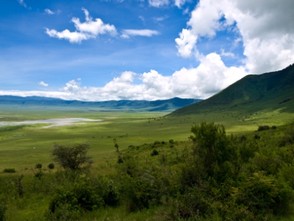
The main feature of the NCA is the Ngorongoro Crater, which is the world’s largest unbroken volcanic caldera. The steep sides of the crater mean that it has become a natural enclosure for a very wide variety of wildlife, including most of the species found in East Africa. Ngorongoro Crater provides some of the best game viewing in all the National Parks of Tanzania. All the lodges are built high on the crater rim and afford amazing views over and into the crater, the perfect location to watch the infamous African sunset.
A population of about 25,000 large animals, including the highest density of mammalian predators in Africa, lives in the crater. These include black rhinoceros, hippopotamus which are usually very uncommon in the area. There are also wildebeest, zebra, eland, Grants and Thomsons gazelles. The crater has the densest known population of lion. On the crater rim are leopard, elephant, mountain reedbuck and buffalo.
Lake Magadi, filled by the Munge river in the centre of the crater is, like many in the rift valley, a soda lake supporting flocks of flamingo and a variety of other water birds, More than a 100 species of bird not found in the Serengeti have been found in the crater including; ostriches, kori bustards, secretary birds, and crowned cranes as well as vultures, egrets, herons and geese.
About Ngorongoro Crater:
Size: It is the largest intact volcanic caldera in the world. It measures about 16-19km in diameter, with walls of 400-610m in height. However you measure it, the Crater is a strong candidate for any list of the world’s greatest natural wonders. The crater floor cover 260km sq (101 miles).
Location: it is situated 180km west of Arusha in the Crater Highlands passing Manyara and Karatu Area.
Getting there
Scheduled and charter flights from Arusha and Mwanza to Manyara and later drive to Ngorongoro Area Or else you can also drive from Arusha, Lake Manyara, Tarangire or Serengeti.
What to do
Daily game-drives into the Crater in closed game viewing vehicles with pop-up roofs.
Bird watching, other Optional activities are walking on the rim of the Crater or in Empakaai Crater, a cultural Maasai boma visit, sundowners with spectacular views over Lake Eyasi.
When to go
The rainy season lasts from November through to May, with the dry season running from June through to October. June and July are the coldest months of the year. The rim of the crater is often shrouded in dense cloud that pours over the crater into the vastness below.
Accommodation
There is no accommodation within Ngorongoro Crater, but there are four lodges perched on its rim. Although there are number of lodges in the Crater Highlands which can be used as a base for trips to the Crater. Three are particularly close – less than about 20km from the crater rim.
